For facilities, critical power & UPS retrofit
Replace the string once. Not every three years.
A VRLA UPS string in a warm room does not reach its datasheet life. It reaches year four, fails a load test, and becomes an unplanned capital request plus a maintenance window plus a period where the thing that protects everything is the thing you least trust.
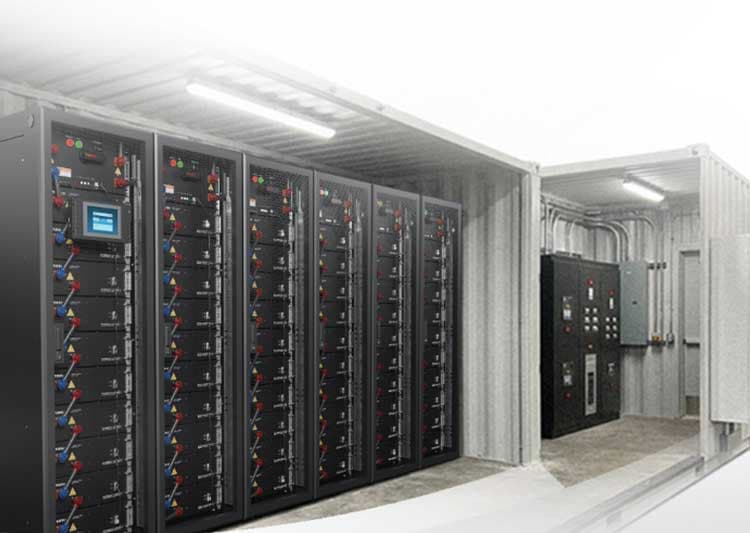
REVO is our LFP alternative to that cycle: rack modules from 0.115 to 10.24 kWh and three-phase cabinets to 122.8 kWh, from 12.8V up to 716.8V. Every dimension below is given in inches and rack units as well as the published millimetres.
Bring your UPS make and model. We will tell you what connects before we tell you what it costs.
- 12.8V – 716.8V
- Published system voltages
- 0.115 – 122.8 kWh
- Module to cabinet range
- 3+ years, zero failures
- SUSTech data center reference
- UL 1973 + 9540A
- REVO 3.0 three-phase line
Sound familiar?
The UPS battery is the only asset you are expected to replace on a schedule and still treat as reliable.
- The string is four years old, it passed the last load test by a margin nobody liked, and the replacement is not in this year's budget.
- Every replacement is a maintenance window, a lift, a disposal manifest, and a period on bypass.
- The battery room is warm, which quietly halves the life of everything in it, and adding cooling is its own capital request.
- You have floor space for exactly the footprint that is there now, and the runtime requirement went up.
- The lithium quote you got is in millimetres, so nobody can confirm it fits the rack you actually have.
- Your AHJ or insurer will ask which listing applies, and the supplier's answer was a paragraph rather than a certificate number.
Single-phase — REVO SP series
Fifteen published configurations from 12.8V to 192V.
The SP family covers small-UPS and distributed backup: a 0.115 kWh module for the smallest units, through 51.2V and 72V rack modules, up to 192V systems. Rack units are calculated from the published height.
REVO single-phase modules
| Model | Nominal | Energy | Rack | Inches (L×W×H) | mm (published) | Cell / config |
|---|---|---|---|---|---|---|
| SP12-9 | 12.8V 9Ah | 0.115 kWh | Standalone | 6.0 × 2.6 × 3.9 | 152 × 65 × 98 | 12.8V 9Ah · 4S1P |
| SP12-100 | 12.8V 100Ah | 1.28 kWh | Standalone | 13.0 × 6.7 × 8.7 | 330 × 171 × 220 | 3.2V 100Ah · 4S1P |
| SP12-200 | 12.8V 200Ah | 2.56 kWh | Standalone | 20.6 × 9.4 × 8.8 | 522 × 238 × 223 | 3.2V 100Ah · 4S2P |
| SP36-50 | 38.4V 50Ah | 1.92 kWh | 5U | 17.4 × 13.8 × 7.4 | 442 × 350 × 189 | 3.2V 50Ah · 12S1P |
| SP36-100 | 38.4V 100Ah | 3.84 kWh | 4U * | 17.4 × 16.5 × 7.0 | 442 × 420 × 177 | 3.2V 100Ah · 12S1P |
| SP36-200 | 38.4V 200Ah | 7.68 kWh | 4U * | 17.3 × 24.0 × 6.9 | 440 × 610 × 174 | 3.2V 100Ah · 12S2P |
| SP48-50 | 48V 50Ah | 2.4 kWh | 4U | 17.4 × 18.5 × 5.9 | 442 × 470 × 149 | 3.2V 50Ah · 15S1P |
| SP48-100 | 48V 100Ah | 4.8 kWh | 4U | 17.4 × 18.5 × 5.9 | 442 × 470 × 149 | 3.2V 100Ah · 15S1P |
| SP51.2-50 | 51.2V 50Ah | 2.56 kWh | 4U * | 17.4 × 19.7 × 7.0 | 442 × 500 × 177 | 3.2V 50Ah · 16S1P |
| SP51.2-100 | 51.2V 100Ah | 5.12 kWh | 4U * | 17.4 × 19.7 × 7.0 | 442 × 500 × 177 | 3.2V 100Ah · 16S1P |
| SP51.2-200 | 51.2V 200Ah | 10.24 kWh | 4U | 17.4 × 35.4 × 5.9 | 442 × 900 × 149 | 3.2V 100Ah · 16S2P |
| SP72-50 | 72V 50Ah | 3.68 kWh | 4U * | 17.3 × 25.6 × 6.9 | 440 × 650 × 174 | 3.2V 50Ah · 23S1P |
| SP72-100 | 72V 100Ah | 7.36 kWh | 4U * | 17.3 × 25.6 × 6.9 | 440 × 650 × 174 | 3.2V 100Ah · 23S1P |
| SP192-9 | 192V 9Ah | 1.72 kWh | 4U | 17.4 × 31.5 × 5.9 | 442 × 800 × 149 | 12.8V 9Ah · 15S1P |
| SP192-28 | 192V 28Ah | 5.37 kWh | 4U * | 17.3 × 27.6 × 6.9 | 440 × 700 × 174 | 3.2V 6Ah · 60S5P |
Three-phase — REVO TP, TPH & TPL series
Five module types, seventeen cabinets, one repeated building block.
Three-phase systems are assembled from identical 51.2V modules, so the cabinet you buy is a decision about how many of them and which type. TPH is the high-power module, TP is standard, TPL is built on 100Ah cells for longer duration.
Three-phase modules
| Model | Nominal | Energy | Rack | Inches (L×W×H) | mm (published) | Cell / config |
|---|---|---|---|---|---|---|
| TPH10 | 51.2V 50Ah | 2.05 kWh | 3U * | 17.4 × 23.6 × 5.0 | 442 × 600 × 127 | 50Ah · 1P16S |
| TP10 | 51.2V 50Ah | 2.56 kWh | 3U | 17.4 × 27.2 × 4.2 | 442 × 690 × 106 | 50Ah · 1P16S |
| TP20 | 51.2V 100Ah | 5.12 kWh | 4U | 17.4 × 31.5 × 5.9 | 442 × 800 × 150 | 50Ah · 2P16S |
| TPL5 | 51.2V 100Ah | 5.12 kWh | 3U | 17.4 × 27.2 × 4.3 | 442 × 690 × 108 | 100Ah · 1P16S |
| TPL10 | 51.2V 200Ah | 10.24 kWh | 4U | 17.4 × 31.5 × 5.9 | 442 × 800 × 149 | 100Ah · 2P16S |
Three-phase cabinets
| Cabinet | Nominal | Energy | Modules | Inches (W×D×H) | mm (published) |
|---|---|---|---|---|---|
| TPH160 | 409.6V 50Ah | 16.38 kWh | 8 × TPH10 | 23.6 × 39.4 × 78.7 | 600 × 1000 × 2000 |
| TPH200 | 512V 50Ah | 20.48 kWh | 10 × TPH10 | 23.6 × 39.4 × 78.7 | 600 × 1000 × 2000 |
| TPH240 | 614.4V 50Ah | 24.5 kWh | 12 × TPH10 | 23.6 × 39.4 × 78.7 | 600 × 1000 × 2000 |
| TP80 | 409.6V 50Ah | 20.48 kWh | 8 × TP10 | 23.6 × 39.4 × 78.7 | 600 × 1000 × 2000 |
| TP100 | 512V 50Ah | 25.6 kWh | 10 × TP10 | 23.6 × 39.4 × 78.7 | 600 × 1000 × 2000 |
| TP120 | 614.4V 50Ah | 30.72 kWh | 12 × TP10 | 23.6 × 39.4 × 78.7 | 600 × 1000 × 2000 |
| TP140 | 716.8V 50Ah | 35.84 kWh | 14 × TP10 | 23.6 × 39.4 × 90.6 | 600 × 1000 × 2300 |
| TP160 | 409.6V 100Ah | 40.96 kWh | 8 × TP20 | 23.6 × 39.4 × 78.7 | 600 × 1000 × 2000 |
| TP200 | 512V 100Ah | 51.2 kWh | 10 × TP20 | 23.6 × 39.4 × 78.7 | 600 × 1000 × 2000 |
| TP220 | 563.2V 100Ah | 56.32 kWh | 11 × TP20 | 23.6 × 39.4 × 90.6 | 600 × 1000 × 2300 |
| TP240 | 614.4V 100Ah | 61.44 kWh | 12 × TP20 | 23.6 × 39.4 × 90.6 | 600 × 1000 × 2300 |
| TPL40A | 409.6V 100Ah | 40.96 kWh | 8 × TPL5 | 23.6 × 39.4 × 78.7 | 600 × 1000 × 2000 |
| TPL50A | 512V 100Ah | 51.2 kWh | 10 × TPL5 | 23.6 × 39.4 × 78.7 | 600 × 1000 × 2000 |
| TPL60A | 614.4V 100Ah | 61.44 kWh | 12 × TPL5 | 23.6 × 39.4 × 78.7 | 600 × 1000 × 2000 |
| TPL80 | 409.6V 200Ah | 81.92 kWh | 8 × TPL20 | 23.6 × 39.4 × 78.7 | 600 × 1000 × 2000 |
| TPL100 | 512V 200Ah | 102.4 kWh | 10 × TPL20 | 23.6 × 39.4 × 78.7 | 600 × 1000 × 2000 |
| TPL120 | 614.4V 200Ah | 122.8 kWh | 12 × TPL20 | 23.6 × 39.4 × 90.6 | 600 × 1000 × 2300 |
Rack units marked * are a tight fit. Those modules sit within about a third of a rack unit of the next boundary, which in practice means checking your rail depth and cable-bend allowance before you commit the opening. We would rather flag it here than have you discover it on install day.
Three inconsistencies in the published tables, stated rather than smoothed over. The TPH10 module is listed at 2.05 kWh where 51.2V × 50Ah computes to 2.56 kWh. The TPL60A cabinet is labelled 200Ah while its twelve TPL5 modules and its 61.44 kWh figure both indicate 100Ah. And the TPL80, TPL100 and TPL120 cabinets reference a TPL20 module that does not appear in the published module table. We are resolving all three with the factory rather than printing a guess. Ask us to confirm the figure for the model you are sizing.
Cabinet dimensions are W × D × H — 23.6 in wide and 39.4 in deep across the range, at either 78.7 in or 90.6 in tall. Confirm your door height and floor loading against the taller variants before you order.
What it changes
Why the retrofit is worth the disruption once.
Repeated identical modules per cabinet
A failed module is a module swap, not a string replacement. It also means your spares inventory is one part number instead of a matched set.
Active balancing across modules
The weakest cell stops setting the ceiling for the whole string, which is the mechanism behind the total-cost case rather than a feature bullet. It was the stated reason for adoption on the Malaysian data center expansion.
Daisy-chain module interconnection
Fewer discrete cable runs to build and fewer to get wrong during a maintenance window. On the Malaysia deployment this was cited specifically for reducing installation labour.
Full-lifecycle BMS reporting
You find out about a degrading module from a report instead of from a load test. That converts an unplanned outage risk into a scheduled task.
Higher energy density than the VRLA it replaces
The same footprint holds more runtime, or the same runtime frees floor space. On the Japanese data center project, space and power optimization was the stated driver.
3-metre drop test without fire or explosion
Relevant where seismic risk is part of the design basis — that test result was specifically why the cells cleared a Japanese data center's safety review.
How a retrofit is scoped
Three questions, and the first is about your UPS, not our range.
- 01
Send the UPS model and the runtime requirement
Make, model, DC bus voltage, charge-current limit, whether it can be set to a lithium charge profile, plus the runtime you must hold and the room's real ambient temperature. Some UPS units need a change before lithium is safe to connect, and that is a yes-or-no answer we give early.
- 02
We size it and confirm the fit in inches
Module and cabinet selection, rack units against your actual opening, floor loading, and the certification status of that exact model and revision as it stands today.
- 03
Plan the changeover, then order
Bypass window, disposal of the outgoing string, commissioning, and lead time for your quarter — agreed before the purchase order, so the schedule is not built on a verbal.
Running installations
Three data centers, three different reasons they chose lithium.
366 sets
Malaysia data center, 2025
REVO 2.5 Pro across a four-phase expansion with the same client. Active balancing and the daisy-chain design were cited for total cost of ownership and installation efficiency. Four repeat phases is the part that matters.
3+ years, no failures
SUSTech data center
REVO batteries in continuous operation for over three years without a single failure, reliably holding the required 20-minute backup, with a four-level protection design for indoor installation.
2024, REVO 2.5 TP240
Japan data center expansion
One of the earliest LFP UPS deployments in the Japanese data center market. Cells passed 3-metre drop testing without fire or explosion — decisive in a market where earthquakes are part of the design basis.

On certification, precisely.
The REVO 3.0 three-phase system is UL 1973 certified and has been UL 9540A tested, with no fire following thermal runaway in that test. UL 1973 is a listing for the battery system; UL 9540A is a fire-propagation test method, not a listing. They are different things and suppliers blur them constantly.
For any other model on this page, ask us for the current certification status of the exact model and revision you intend to install. If the answer is not yet, you will hear not yet — because your AHJ will ask by name, and that is a much cheaper conversation to have with us in week one than with them in month nine.
The objections, answered
What stops facilities teams from making this change.
“Lithium in my battery room is a fire-code argument I do not want.”
It is a real conversation and it is better had at design than at inspection. Bring us your jurisdiction and your insurer's requirements and we will tell you which model has what documentation today, including where it does not exist yet. The REVO 3.0 line has been UL 9540A tested with no fire following thermal runaway, which is precisely the evidence that conversation runs on.
“The VRLA string is cheaper per kWh and I know how it behaves.”
Per kWh at purchase, yes. The comparison that decides it is replacement frequency, labour per changeover, floor space, and how many unplanned capital requests you want in the next decade. If your string is genuinely in a cool room on a long cycle, VRLA may still be the right answer and we will tell you so — we also still make it.
“My UPS was never specified for lithium.”
Then that is the gating item, ahead of everything on this page. Send the make and model. Some units need only a battery-type setting, some need firmware, and some should not be paired with lithium at all. We will put you in one of those three buckets before quoting.
“Support means somebody in a different time zone.”
Our US operation answers in Joplin, Missouri at (408) 309-1021, Monday–Friday, 8:00–5:00 Central, with warehousing in Lancaster, Texas. During qualification, ask us what after-hours escalation actually looks like and hold us to the answer rather than to a promise on a web page.
“Nobody in critical power has heard of Vision.”
In the US, largely true. Vision has manufactured since 1994, is listed on the Shenzhen Stock Exchange: 002733, and has UPS lithium running in Malaysian, Japanese and Chinese data centers. The recognition gap is a marketing failure, not an engineering one, and it is the thing this site exists to correct.
A VRLA string does not warn you. It passes a load test at a margin nobody liked, then fails the next one — and that failure sets the date, not your capital plan. The only version of this you control is the one you schedule.
Sizing storage rather than backup? The containerized energy storage range is here.
System sizing call
Send the UPS model. We will tell you what connects to it.
Thirty minutes with an applications engineer. You will leave knowing whether your UPS can take lithium at all, which modules fit the opening you have, and what the certification position is for the exact model — including where it is not yet what you need.
Phone (408) 309-1021 · Monday–Friday, 8:00–5:00 Central
Email sales@visionbattery.us
Questions
What critical-power engineers ask before price.
Will these systems work with the UPS I already have?
That is the first question to settle and it is settled with your UPS make and model, not with a catalogue. Send us the UPS model, the DC bus voltage, the charge-current limit, and whether the UPS expects a lead-acid charge profile. Some UPS units need a firmware setting or a battery-type change before lithium is safe to connect. We will tell you which category yours falls into before you buy anything.
Do you have UL listings for these systems?
The REVO 3.0 three-phase system is UL 1973 certified and has been UL 9540A tested, with no fire observed following thermal runaway in that test. That is a specific claim about a specific product line. For any other model here, ask us for the current certification status of the exact model and revision you intend to install — and if the answer is not yet, you will hear not yet. Your AHJ will ask by name and a general reassurance will not survive that conversation.
How long do these actually last compared to the VRLA string they replace?
A VRLA UPS string in a warm room is typically on a three-to-five year replacement cycle regardless of what the datasheet said. LFP changes the shape of that curve rather than removing it. Rather than quote you a headline number, we would rather show you the SUSTech data center reference — REVO batteries in continuous operation for over three years with no failures, holding the required 20-minute backup — and then send the cycle-life curve for the specific model at your room temperature.
What is the difference between the SP, TP, TPH and TPL series?
SP is the single-phase family, from a 12.8V 9Ah module up to 192V. TP is the three-phase family, assembled from 51.2V modules into cabinets from 409.6V to 716.8V. Within three-phase, TPH is the higher-power module, TP is the standard, and TPL is the long-duration module built on 100Ah cells rather than 50Ah. Which one you want is driven by whether your constraint is power or runtime.
Can I expand later without replacing what I bought?
The three-phase cabinets are built from repeated identical modules — a TP200 is ten TP10 modules, a TP240 is twelve TP20 modules. That is the mechanism for expansion, but the ceiling depends on the cabinet, the busbar, and your UPS's DC limits. Ask us to confirm the expansion path for your configuration before you buy the first cabinet, not after.
Why are the dimensions on your published tables only in millimetres?
Because those tables were written for a different market, and it is a fair criticism. The inch and rack-unit columns on this page are converted from the published metric figures. Where a module height falls awkwardly across a rack unit we flag it, because discovering that on install day is exactly the kind of surprise that costs a weekend.
Who installs and commissions this?
We supply and specify; installation is normally your electrical contractor or integrator. What we do is get the sizing, the interface, and the documentation right before anyone is on site, and take the call when something does not match the drawing. That line is (408) 309-1021, Monday–Friday, 8:00–5:00 Central.